Catalog by type of application
Aspiration



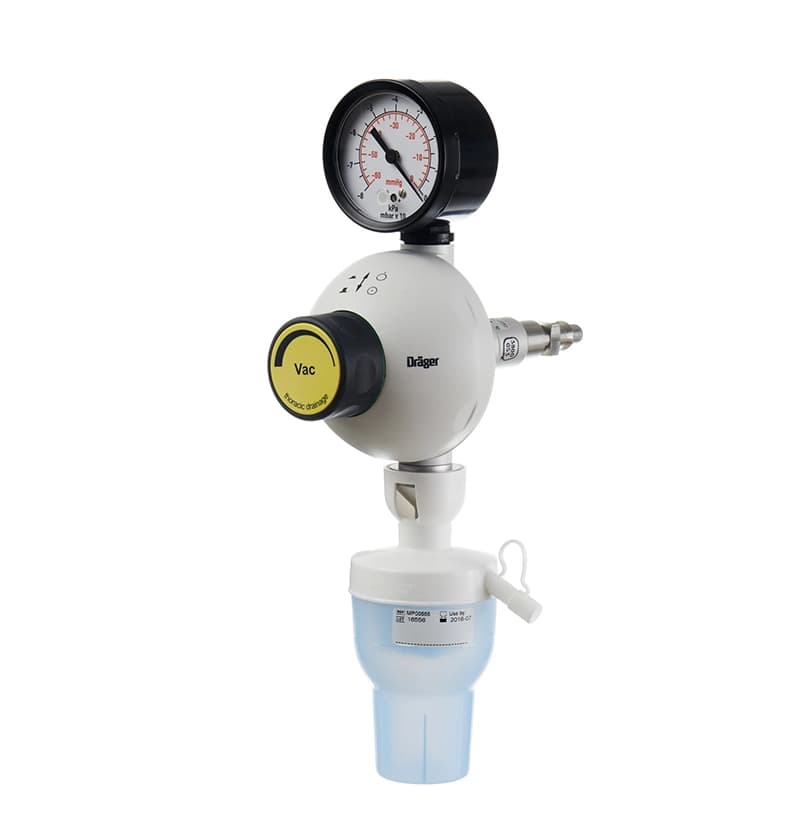
Medical Aspiration – Dräger VarioVac and Dräger VarioAir
Aspirators are used in surgical, resuscitation, and procedural areas for continuous removal of biological fluids from the working site. Their main task is to maintain a clean intervention field and ensure the stability of manipulations without interrupting the process due to the accumulation of blood or secretion. The stability and precision of the vacuum affect the controllability of instruments, the speed of surgical actions, and the safety of working conditions.
Aspirating systems are used during surgical interventions, in intensive care units, anesthesiology, and when caring for patients with breathing disorders. Controlled vacuum prevents fluid accumulation in the intervention area, providing clear visualization of tissues and reducing the need for additional interruptions during surgery. In critical conditions, for example in airway obstruction, an aspirator allows the rapid removal of secretions or foreign masses, ensuring airway patency and adequate ventilation.
For clinical use, it is important that the system maintains a stable vacuum without sudden fluctuations. Pressure inconsistency complicates the surgeon’s work and may cause unwanted mechanical effects on tissues. Therefore, the accuracy of settings and reproducibility of vacuum parameters are of key importance.
An aspirating system consists of a vacuum regulator, a manometer for parameter control, protective valves and a filtration module, as well as a fluid collection container. The regulator determines the intensity of aspiration according to clinical requirements. The manometer ensures visual pressure monitoring. Protective elements prevent the backflow of fluid into the system, ensuring safety and reliability. Containers may be single-use or reusable depending on the healthcare facility’s infrastructure.
Filtration blocks are designed to retain microparticles, bacterial and viral agents, reducing the risk of cross-contamination. Such a design protects both personnel and equipment.
Dräger VarioVac operates in combination with a centralized vacuum system in the medical facility. The regulator provides a stable vacuum level, and the rotating manometer allows convenient parameter monitoring regardless of device placement. The system is compatible with various types of collectors and filtration solutions, facilitating adaptation to specific department conditions.
Dräger VarioAir does not require a centralized vacuum infrastructure. Vacuum formation is achieved through the flow of medical air or gas from the internal network. This allows it to be used in mobile conditions or in places where a vacuum system is absent. Aspiration force is regulated on the device, and filtration elements provide microbiological protection and fluid isolation.
All components of Dräger systems are designed with emphasis on uninterrupted operation and precise aspiration control. This ensures the stability of surgical manipulations even during prolonged interventions.
The main selection factor is the availability or absence of a centralized vacuum system in the facility. If one is installed, the optimal solution is VarioVac. If mobility or autonomy is required, VarioAir is appropriate. The required accuracy of vacuum control and the configuration of fluid collection containers are also taken into account.
Proper selection ensures continuous and safe fluid removal during therapeutic and surgical interventions.
We supply equipment through official manufacturer channels with confirmed certification. We provide technical support, assistance in selecting compatible consumables, and service maintenance. The availability of original components guarantees long-term efficiency and safe use of the equipment.